Walking into a job interview can feel like stepping into a spotlight you didn’t ask for. But it doesn’t have to be intimidating. With the right preparation and mindset, you can transform that nervous energy into calm confidence. This interview warm-up guide is designed to help you prepare smartly, present yourself confidently, and leave a lasting impression. Whether you’re a fresher or a professional in India aiming for your next big opportunity, these steps will help you ace any job interview with confidence.
Why an Interview Warm-up Matters
An interview isn’t just a test of skill — it’s a test of how you carry yourself. Recruiters pay attention to your clarity, tone, and composure just as much as your answers. Warming up before an interview helps you get into the right headspace, control your nerves, and project assurance from the moment you step in.
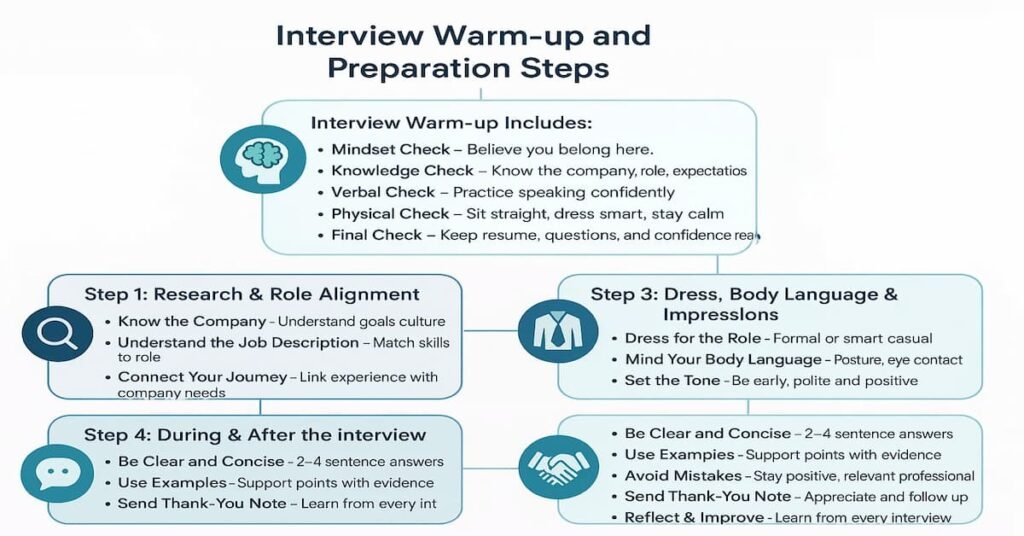
What an Interview Warm-up Includes
- Mindset check: Remind yourself that you belong here and you’ve prepared.
- Knowledge check: Be sure you know the company, role, and expectations.
- Verbal check: Practice speaking your answers aloud to sound natural.
- Physical check: Sit up straight, dress appropriately, and manage your expressions.
- Final check: Keep your questions, resume, and confidence ready.
Step 1 – Research and Role Alignment
Know the Company
Research the company’s goals, culture, and recent work. When you understand how they operate, your answers sound tailored and relevant. Mention something meaningful about them when asked “Why do you want to work here?”
Understand the Job Description
Read the job post carefully. Highlight the key skills and match them with your own experience. For example, if they want “excellent communication,” bring up a real instance that shows your communication strength.
Connect Your Journey to Their Needs
Every answer should subtly follow this pattern: What you’ve done → How it matches their need → What you want to do next with them. That’s how you sound aligned, confident, and prepared.
Step 2 – Practice and Verbal Preparation
Rehearse Common Questions
Prepare for the most asked interview questions: “Tell me about yourself,” “What are your strengths and weaknesses,” “Why should we hire you,” and “Where do you see yourself in five years.” Practicing your responses out loud helps reduce anxiety and smoothens delivery.
Use the STAR Method for Situational Answers
For experience-based questions, use the STAR framework:
- Situation: Describe the context briefly.
- Task: State your responsibility.
- Action: Explain what you did.
- Result: End with the outcome.
This method keeps your answers organized and impactful.
Warm Up Your Voice
Say your answers aloud before leaving home. Check your tone, clarity, and pace. Avoid filler words like “um” or “you know.” Sound natural, calm, and self-assured.
Step 3 – Dress, Body Language, and First Impressions
Dress for the Role
Your outfit should reflect professionalism. For formal settings, wear neatly pressed formals. For start-ups or creative roles, go for smart casuals that still look polished. Always stay neat and well-groomed.
Mind Your Body Language
Sit straight, maintain gentle eye contact, and use hand gestures naturally. Don’t fidget or cross your arms. In online interviews, ensure your camera is at eye level, and the background is tidy.
Set the Right Tone
Arrive a few minutes early, greet politely, and smile. Start with gratitude — something as simple as “Thank you for having me today” creates a good impression immediately.
Step 4 – During the Interview
Be Clear and Concise
Keep your answers short and to the point. Two to four sentences per question is ideal. Avoid long stories — clarity shows confidence.
Use Examples
Whenever possible, add a quick example to back up your point. For example: “In my last project, I handled client communication and helped reduce response time by 20%.”
Avoid Common Mistakes
- Don’t speak negatively about previous employers.
- Don’t over-share personal information.
- Don’t give vague or generic answers.
Ask Smart Questions
When given a chance, ask insightful questions such as:
- “What does a typical day in this role look like?”
- “How does this role contribute to the company’s goals?”
This shows curiosity and genuine interest.
Step 5 – After the Interview
Send a Thank-You Note
After the interview, send a short thank-you message or email. Appreciate their time and restate your enthusiasm for the position. It shows professionalism and attention to detail.
Reflect on Your Performance
Write down what went well and where you can improve. Each interview is a chance to refine your approach and boost your confidence.
Stay Professional Throughout
Even after the interview, remain polite and responsive. How you follow up can influence hiring decisions more than you think.
Bonus: Adapting to the Indian Job Market
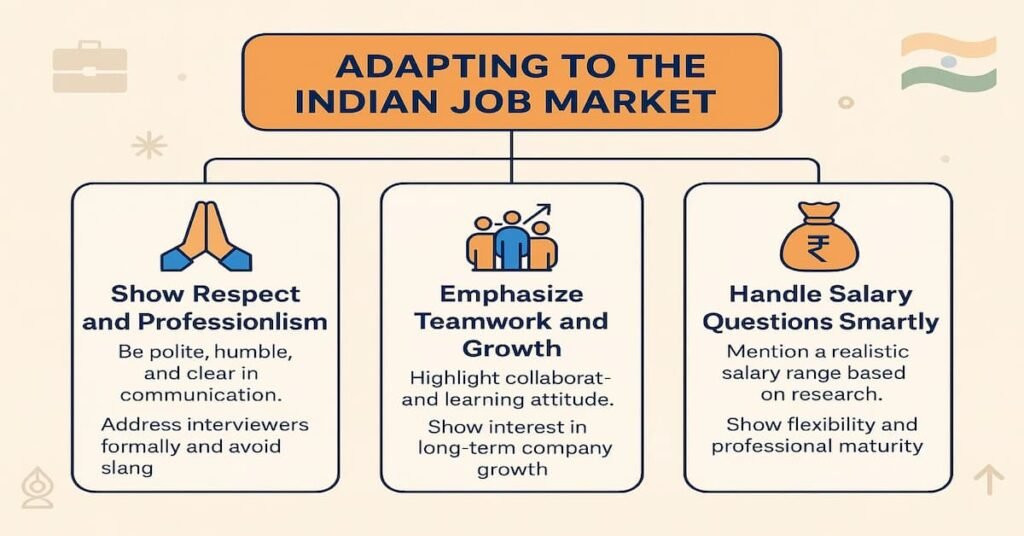
Show Respect and Professionalism
Politeness, humility, and clarity are highly valued in Indian workplaces. Address interviewers respectfully and avoid casual slang.
Emphasize Teamwork and Growth
Companies in India often value candidates who can collaborate and stay long-term. Highlight your ability to work in teams and your interest in continuous learning.
Handle Salary Questions Smartly
If asked about salary expectations, quote a realistic range based on market research. Keep flexibility — it signals maturity and understanding.
Conclusion: Confidence Comes from Preparation
Confidence doesn’t magically appear on interview day — it’s built during your preparation. When you research, practice, and visualize success, you naturally carry yourself with ease. The key is to warm up your mind, voice, and attitude before every interview.
Remember, every question is a chance to show who you are and how you fit. Walk in calm, walk out proud. That’s how you ace any job interview with confidence.