Preparing for a job interview can be stressful, especially when you’re unsure about what questions will be asked or how to make the best first impression. Every interviewer looks for confidence, clarity, and the ability to communicate your value effectively. Whether you’re a fresher attending your first interview or an experienced professional aiming for a better position, this guide covers all the common job interview questions and proven ways to impress interviewers instantly.
Let’s dive into how you can stand out and turn your next interview into a success story.
Understanding Common Job Interview Questions in India
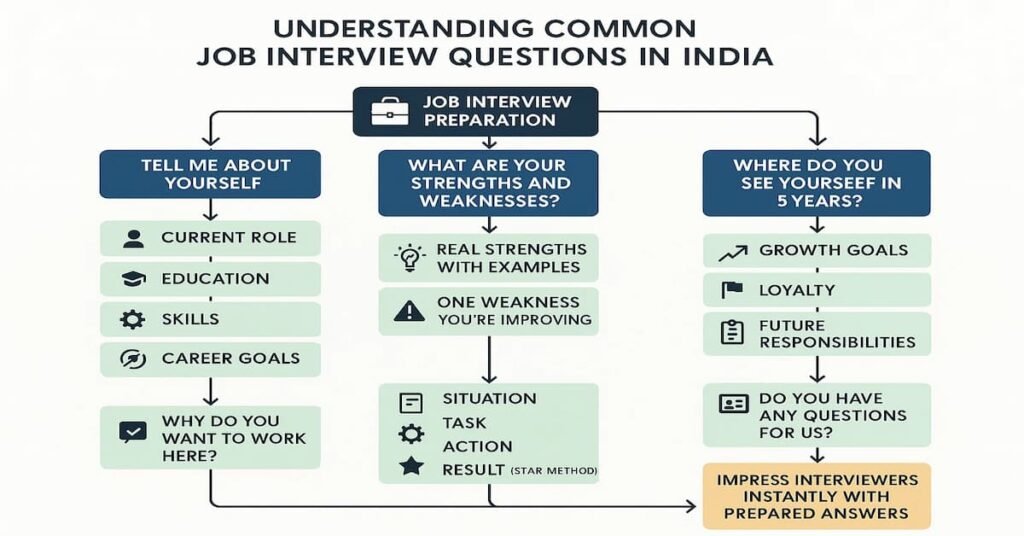
Most interviewers use standard questions that reveal how well you know yourself, how you fit into the company culture, and how ready you are for the role. These questions might seem simple, but your answers can make or break your chances.
Common job interview questions include:
- Tell me about yourself
- What are your strengths and weaknesses?
- Why do you want to work here?
- Where do you see yourself in five years?
- Describe a challenge you’ve faced at work
- Do you have any questions for us?
Each question gives you a chance to highlight your personality, achievements, and values. Let’s explore how to answer them effectively.
1. Tell Me About Yourself
This is often the first question and your best opportunity to set the tone. Instead of listing your entire background, keep it professional and focused on your experience, achievements, and goals.
How to Answer:
- Start with your current or most recent role.
- Briefly mention your education and relevant experience.
- Highlight 2–3 skills that make you ideal for the job.
- End with why you’re excited about this opportunity.
Example:
“I’m a results-driven marketing professional with three years of experience in digital campaigns and brand strategy. I enjoy finding creative ways to grow business visibility, and I’m particularly interested in this role because it aligns perfectly with my passion for performance marketing and data-driven decision-making.”
Quick Tips:
✅ Keep it under two minutes
✅ Sound natural and confident
✅ Focus on what makes you valuable to this specific role
2. What Are Your Strengths and Weaknesses?
Interviewers ask this to evaluate your self-awareness. Talk about your real strengths, supported by examples, and mention one manageable weakness that you’re actively improving.
How to Answer Strengths:
- Identify 2–3 strengths that match the job description.
- Back them up with real-life examples.
Example:
“One of my key strengths is problem-solving. I enjoy analysing challenges and finding efficient solutions. For instance, in my previous job, I streamlined a process that reduced project turnaround time by 20%.”
How to Answer Weaknesses:
- Mention one genuine weakness.
- Explain what you’re doing to overcome it.
Example:
“I used to find public speaking challenging, but I’ve been attending workshops and volunteering for presentations. It’s helped me become much more confident when addressing teams.”
3. Why Do You Want to Work Here?
This question tests how well you’ve researched the company and whether your values align with theirs.
How to Answer:
- Show genuine knowledge about the company’s goals or projects.
- Connect their mission with your career aspirations.
- Explain how you can contribute to their growth.
Example:
“I admire how this organisation focuses on innovation and employee development. With my experience in client relationship management and my interest in continuous learning, I believe I can contribute to both business growth and team culture.”
4. Where Do You See Yourself in Five Years?
This question helps employers gauge your ambition and long-term commitment.
How to Answer:
- Highlight growth, learning, and loyalty.
- Show you see yourself evolving within their company.
Example:
“In five years, I see myself taking on managerial responsibilities, mentoring new team members, and contributing to strategic decisions that help the company expand into new markets.”
5. Describe a Challenge You’ve Faced at Work
Interviewers ask this to understand how you deal with problems. Use the STAR method (Situation, Task, Action, Result) for structured storytelling.
Example:
- Situation: “A key project I was handling fell behind due to unexpected delays.”
- Task: “I had to coordinate between teams to get things back on track.”
- Action: “I implemented daily check-ins, reassigned resources, and set milestone reviews.”
- Result: “We completed the project successfully and even improved future workflow efficiency.”
Pro Tip: Focus on what you did, not what others failed to do.
6. Do You Have Any Questions for Us?
This is your chance to show enthusiasm and initiative. Always ask at least one meaningful question.
Good Questions to Ask:
- “What does success look like in this role after six months?”
- “How does your organisation support employee growth?”
- “What qualities are most important for succeeding in this position?”
This leaves the interviewer with a positive impression of your curiosity and professionalism.
How to Impress Interviewers Instantly
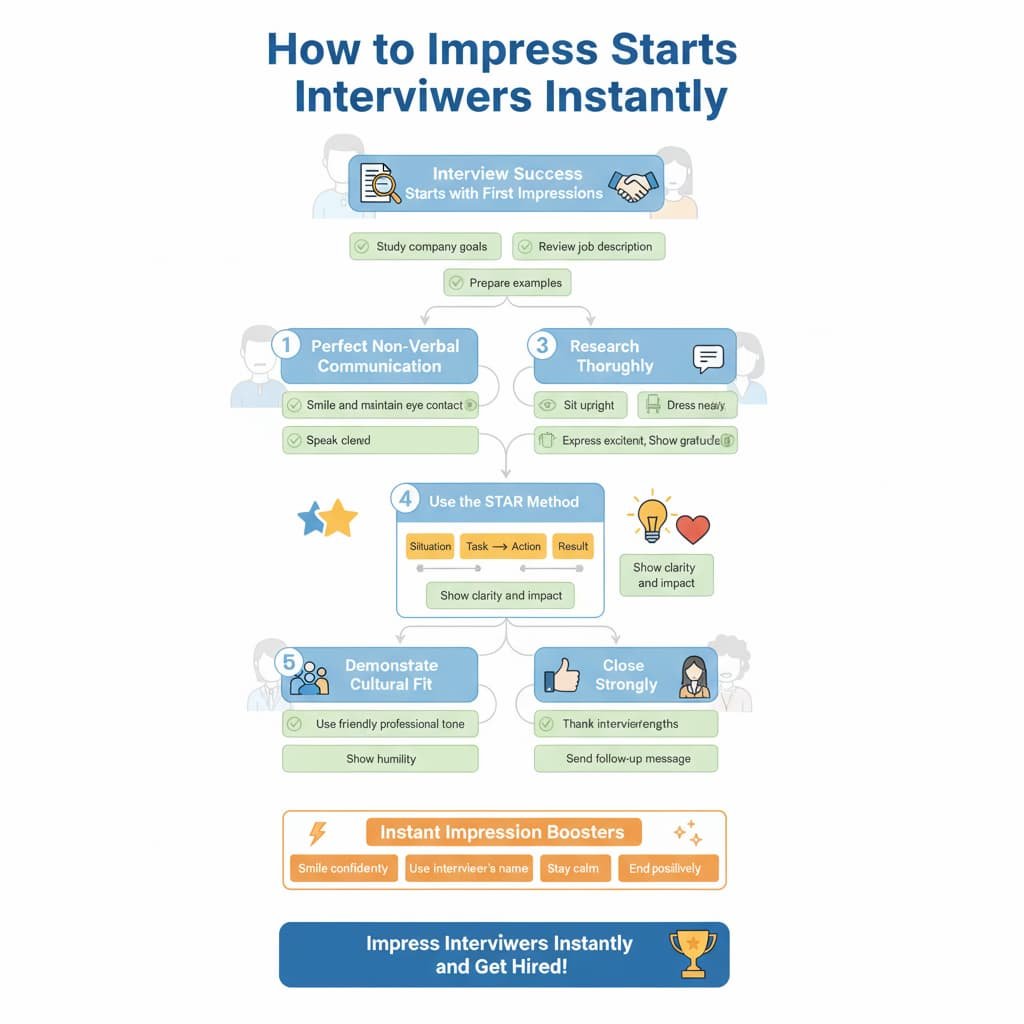
Knowing the answers is important—but how you present yourself makes the biggest difference. First impressions are formed within seconds, so everything from your body language to your tone matters.
Let’s look at the key strategies to impress interviewers instantly.
1. Research Thoroughly Before the Interview
Preparation shows seriousness. Learn about the company’s products, values, recent achievements, and the specific job role. When you naturally mention these during your answers, it signals that you’ve done your homework.
Tips:
- Read the job description line by line.
- Understand the company’s goals.
- Prepare relevant examples to show alignment.
2. Perfect Your Non-Verbal Communication
Your body language often speaks louder than words. Interviewers notice posture, gestures, and facial expressions immediately.
Do’s:
- Maintain eye contact and smile genuinely.
- Sit upright with open body language.
- Dress neatly and appropriately for the company culture.
- Speak clearly and confidently.
Don’ts:
- Avoid crossing arms or fidgeting.
- Don’t interrupt or rush your answers.
3. Use the STAR Method Effectively
When answering behavioural questions, use the STAR (Situation, Task, Action, Result) framework. It gives your responses structure, clarity, and impact.
Example:
“When I noticed a recurring customer issue (Situation), I decided to create a step-by-step process to resolve it (Task). I collaborated with my team to implement the new system (Action), and we reduced complaints by 30% in three months (Result).”
This approach demonstrates your analytical and leadership abilities.
4. Show Genuine Enthusiasm
Energy and enthusiasm are infectious. Speak with warmth and positivity about your experiences. Employers want someone who enjoys their work and will bring that same attitude to the team.
How to show enthusiasm:
- Smile naturally when discussing your achievements.
- Use positive words like “excited,” “motivated,” “inspired.”
- Express gratitude for being considered.
5. Demonstrate Cultural Fit
Companies in India often value personality as much as skill. They want employees who can blend with existing teams and respect organisational culture.
Tips:
- Use professional yet friendly language.
- Be polite and respectful, regardless of the interviewer’s tone.
- Show humility along with confidence.
6. Close Strongly
End your interview by summarising your key strengths and reinforcing your interest. A strong closing leaves a lasting impression.
Example:
“Thank you for your time. I’m very enthusiastic about the opportunity to contribute my skills in [specific area] and be part of your growing team.”
You can also send a short thank-you note within 24 hours. This small gesture shows professionalism and courtesy.
Interview Preparation Tips for Indian Job Seekers
Indian interviews often involve multiple rounds—HR screening, technical assessment, and final management discussion. Being ready for each round ensures consistency and confidence.
Preparation Checklist:
- Review your resume thoroughly; be ready to explain every point.
- Brush up on technical knowledge if the role requires it.
- Practise common interview questions aloud.
- Prepare examples from your projects, internships, or achievements.
- Carry extra copies of your resume and a notepad for notes.
Pro Tip: Avoid memorising answers word-for-word. Speak naturally; it builds authenticity.
Instant Impression Boosters During the Interview
If you want to impress interviewers instantly, apply these real-time tactics:
- Greet with a confident smile and firm handshake (if in person).
- Use the interviewer’s name respectfully during conversation.
- Listen carefully and pause before answering.
- Maintain positive energy throughout the discussion.
- Thank the interviewer genuinely at the end.
Even small gestures like good eye contact, confident posture, and attentive listening can instantly differentiate you from other candidates.
Behavioural Interview Mastery
Modern interviews increasingly focus on behavioural questions—testing how you’ve handled real-life situations. Practise answering questions like:
- “Tell me about a time you faced conflict at work.”
- “Describe a project you’re proud of.”
- “How did you handle failure in the past?”
Use specific, real examples. Show your ability to learn, adapt, and deliver results. The goal isn’t perfection—it’s demonstrating growth mindset and accountability.
Conclusion
Mastering common job interview questions and learning how to impress interviewers instantly can transform your interview performance. Preparation, confidence, and clarity are the three keys to success.
By researching the company, practising structured answers, maintaining strong body language, and showing genuine enthusiasm, you can leave a memorable impression that lasts beyond the interview. Remember, interviews aren’t about perfection—they’re about connection, confidence, and communication.
Walk in prepared, walk out proud.