Interviews are stressful enough without the added mystery of what’s coming next. Whether you’re a fresher walking into your first HR round or an experienced professional eyeing a career leap, knowing the most common interview questions and answers gives you an edge. This guide breaks down the top seven questions recruiters in India ask most often and explains how to answer them simply, clearly, and confidently.
Mastering these interview questions and answers isn’t about memorizing scripts. It’s about understanding what interviewers want, crafting real responses that show your value, and presenting yourself with calm professionalism. Let’s get started.
What Are the “Common Interview Questions and Answers” You Should Know?
Employers ask certain questions again and again because they reveal the essentials: who you are, how you think, and whether you’ll fit in. These common interview questions in India go beyond qualifications; they test attitude, adaptability, and clarity of thought.
By preparing answers in advance, you’ll avoid nervous silences, show self-awareness, and create a strong first impression. Let’s unpack each question and the best way to handle it.
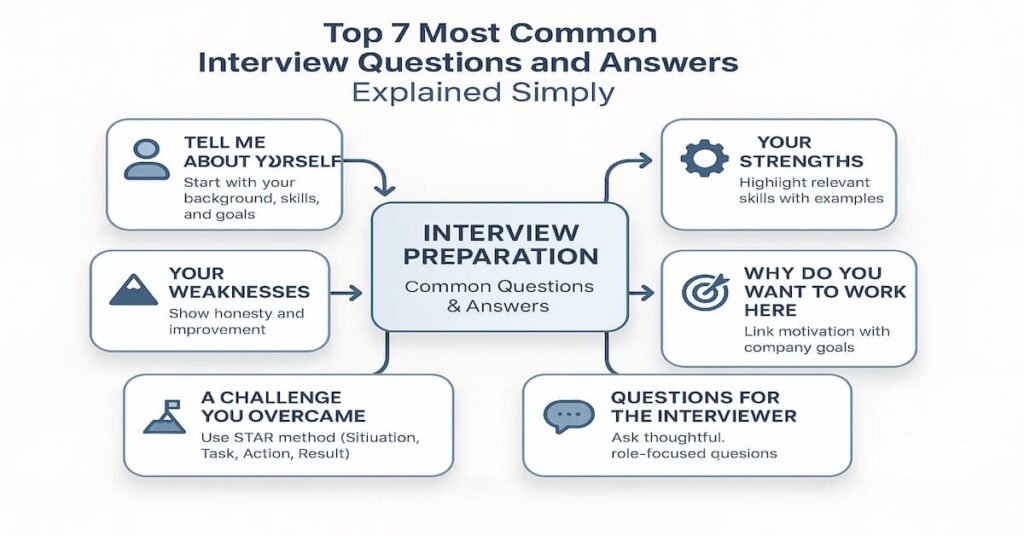
1. Tell Me About Yourself
What They’re Looking For: A short, clear story that connects your background to the job.
How to Answer Simply:
- Begin with your present role, education, or most recent experience.
- Mention a few relevant achievements or skills.
- Conclude with what you want next and how it aligns with the company’s goals.
Example:
“I recently completed my B.Com and worked on several internships where I improved my communication and client-handling skills. I’m now looking for a role where I can build my career in finance and contribute to a growing organization.”
Keyword Variations: tell me about yourself answer for freshers, self-introduction for interview India, common interview question examples.
2. What Are Your Strengths?
What They’re Looking For: Qualities that match the role, backed by proof.
How to Answer Simply:
- Choose two or three strengths relevant to the job.
- Support each with a quick real-life example.
- Link them directly to how they’ll help the company.
Example:
“One of my strengths is teamwork. During my last project, I coordinated between departments and ensured deadlines were met. Another is problem-solving — I try to stay calm under pressure and focus on solutions.”
Keyword Variations: strengths in interview answers India, best strengths examples, common HR questions and answers.
3. What Are Your Weaknesses?
What They’re Looking For: Honesty and willingness to improve.
How to Answer Simply:
- Pick a manageable weakness (not a fatal flaw).
- Show the steps you’re taking to overcome it.
Example:
“I used to find it hard to say no when people asked for help, which sometimes affected my own deadlines. I’m learning to manage my time better and communicate my workload clearly.”
Keyword Variations: weakness in interview answers India, how to answer weaknesses question.
4. Why Do You Want to Work Here?
What They’re Looking For: Genuine motivation and cultural fit.
How to Answer Simply:
- Mention something specific about the company that excites you — its values, projects, or goals.
- Connect it with your own career interests and skills.
- Emphasize long-term growth.
Example:
“I admire how this company focuses on innovation and employee learning. I believe my skills in project coordination and communication will help me grow here while contributing to your team’s success.”
Keyword Variations: why do you want this job answer India, why should we hire you.
5. Where Do You See Yourself in Five Years?
What They’re Looking For: Ambition that aligns with the role.
How to Answer Simply:
- Talk about professional growth, not unrealistic dreams.
- Show consistency — that this job fits your plan.
Example:
“In five years, I see myself handling bigger projects and mentoring new team members. I’m focused on learning every aspect of this role and growing within the organization.”
Keyword Variations: five year plan interview answer, career goals question answer India.
6. Tell Me About a Challenge You Faced and How You Overcame It
What They’re Looking For: Problem-solving skills and composure under pressure.
How to Answer Simply (Use the STAR Method):
- Situation: Describe the context briefly.
- Task: Explain your responsibility.
- Action: Describe what you did.
- Result: End with the outcome.
Example:
“In my college fest committee, we faced last-minute cancellations from sponsors. I contacted local businesses, presented our event plan, and secured two new sponsors within a week. The event was a success.”
Keyword Variations: behavioral interview questions India, situational interview question examples.
7. Do You Have Any Questions for Us?
What They’re Looking For: Interest and initiative.
How to Answer Simply:
Prepare one or two thoughtful questions that show curiosity about the company or role. Avoid questions about salary or holidays at this stage.
Example Questions to Ask:
- “What does success look like in this role?”
- “How does the team usually collaborate on projects?”
Bonus Questions:
- Why did you leave your last job? — Frame it positively, focusing on growth.
- What is your salary expectation? — Give a researched range and show flexibility.
Keyword Variations: questions to ask interviewer India, salary expectation answer, HR interview questions India.
Extra Tips to Succeed in Interviews
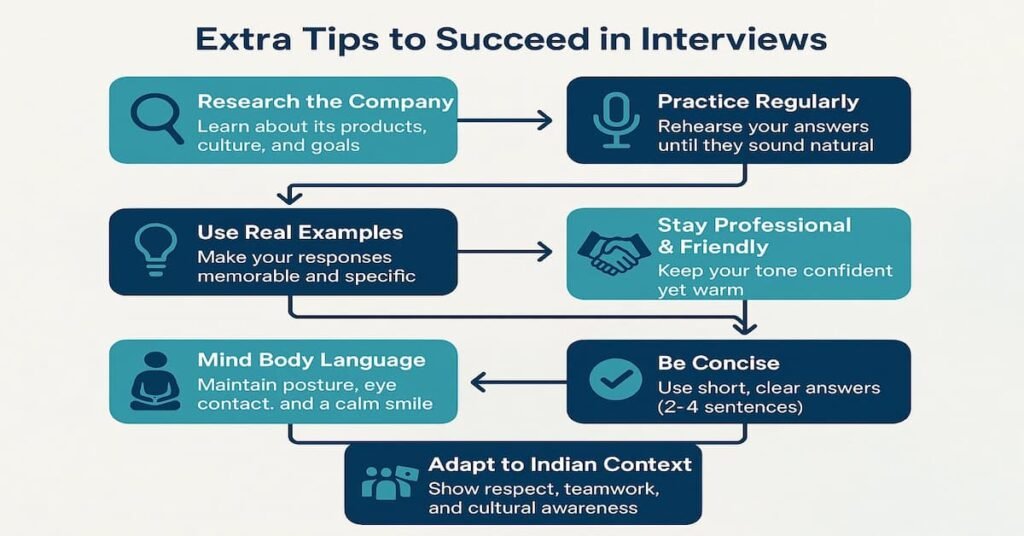
- Research deeply about the company, its products, and work culture.
- Practice regularly so your answers sound natural.
- Use examples to make your points memorable.
- Keep your tone professional yet friendly.
- Mind your body language: good posture, eye contact, and a calm smile matter more than you think.
- Be concise: two-to-four sentence answers show clarity and confidence.
- Adapt for the Indian context: show respect, focus on teamwork, and align with the company’s mission.
Keyword Variations: interview preparation tips for freshers, job interview guidance India, interview body language.
Conclusion
Preparation is the difference between average and outstanding candidates. By studying these common interview questions and answers, you can approach any HR or technical round with confidence. Whether you’re aiming for your first job or a better one, practice these seven questions until your answers sound both natural and impactful.
Remember, recruiters are not looking for perfection. They’re looking for clarity, confidence, and authenticity. Keep your focus on your strengths, stay calm, and treat every interview as a learning experience. With these strategies, your next opportunity won’t feel intimidating — it’ll feel like the right match.